



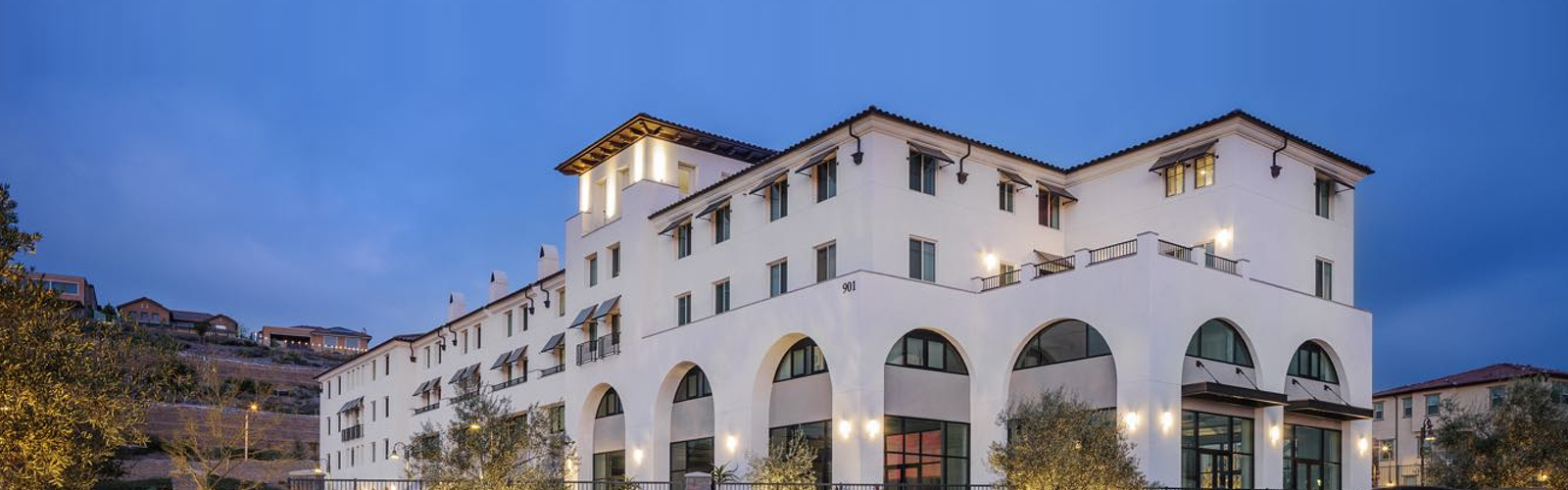
TL;DR
California leads the nation in building energy standards, and San Diego’s climate and development culture put sustainability at the center of virtually every project AVRP designs. But AVRP’s approach to sustainability runs deeper than Title 24 compliance. It is one of the firm’s four core design values: Design and Sustainability Are Intertwined. This piece explains what that means in practice — on schools, hospitals, high-rises, and custom homes.
California’s Building Energy Context
California’s Title 24 Building Energy Standards — updated on a two-year cycle by the California Energy Commission — set the most stringent building energy requirements in the United States. The 2025 Title 24 standards, effective January 1, 2026, require all newly constructed residential and nonresidential buildings to meet increasingly aggressive performance thresholds, including near-zero energy requirements for most new residential construction and expanded all-electric mandates that are phasing out natural gas in new buildings across much of the state.
San Diego Gas & Electric’s grid is among the cleanest in California, with significant renewable penetration. This makes all-electric building strategies increasingly viable from both an environmental and operational cost standpoint — a calculation that AVRP’s design teams build into early energy modeling on every project.
AVRP’s Sustainability Value: What It Actually Means
AVRP’s second design value — Design and Sustainability Are Intertwined — is not a marketing statement. It is a directive that shapes how the firm approaches massing, materials, orientation, systems selection, and program. The value has three components:
- Maximum value from minimum resources. Sustainable design is not about adding technology — it is about using less. Every square foot of program, every linear foot of facade, every ton of concrete or steel is a resource. Designing with discipline reduces both environmental impact and construction cost.
- Lasting environmental benefit. Short-cycle design decisions — materials that require frequent replacement, mechanical systems sized for peak loads that rarely occur, envelope designs that rely on mechanical systems to compensate for poor orientation — embed long-term environmental cost into buildings. AVRP’s designs are evaluated for 50-year performance, not just first-cost.
- Social and economic benefit. Sustainable buildings reduce operating costs for residents and institutions. A well-daylit school reduces energy costs and improves student outcomes. An affordable housing project with a high-performance envelope reduces tenant utility burden. Sustainability and social equity are not competing values — they compound each other.
Applied Sustainability: AVRP Projects in Practice
Hologic Innovation Center
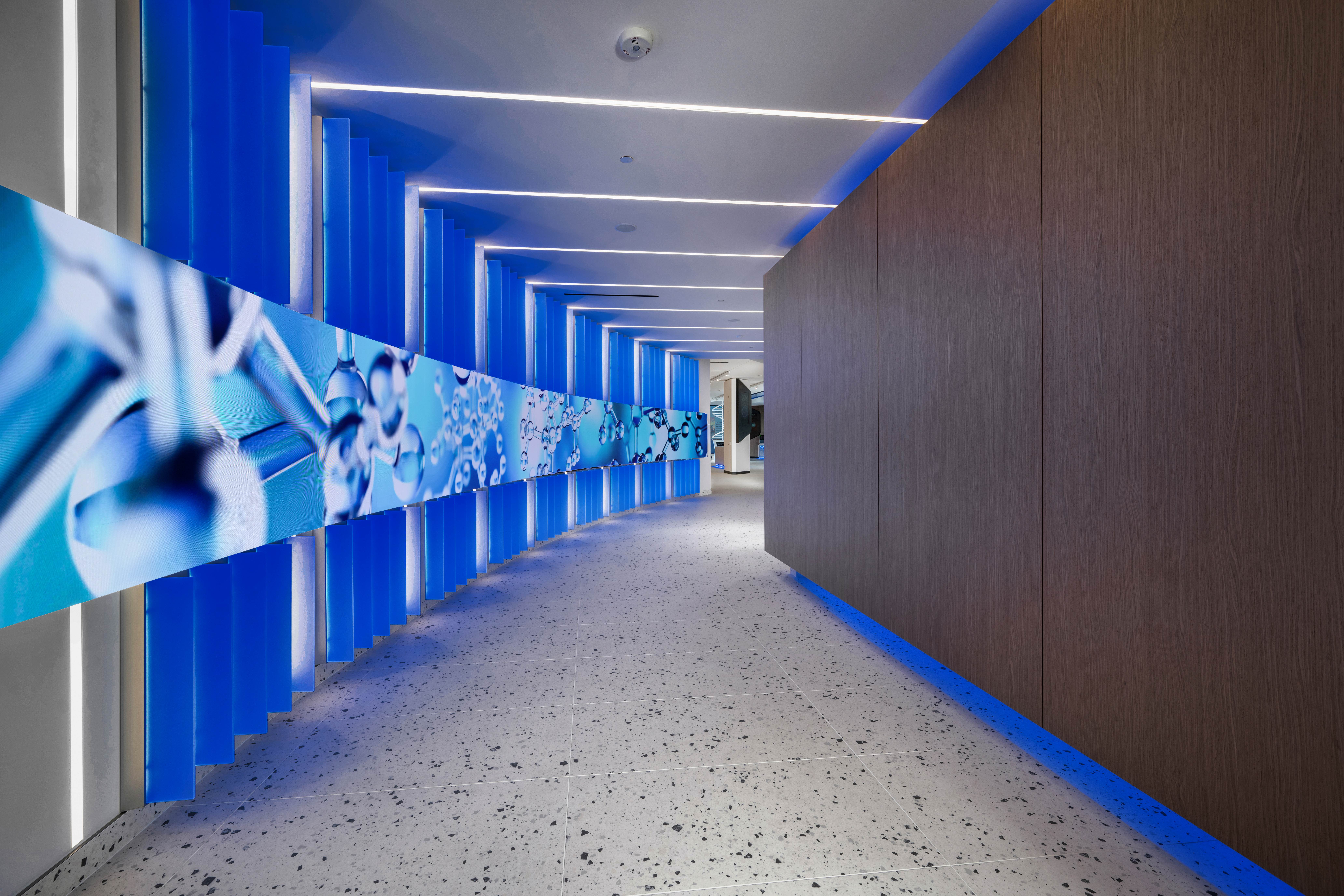
The Hologic Innovation Center is one of the most sustainability-focused workplace projects in AVRP’s San Diego portfolio. The design prioritizes natural light and material health, incorporating low-VOC finishes, sustainably sourced materials, and a spatial organization that maximizes daylight access throughout the building. The project received a 2024 SDBJ Outstanding Architectural Design Award.
Conrad Prebys Foundation Offices
The Conrad Prebys Foundation offices are the first commercial space in San Diego to incorporate the Hummingbird air quality monitoring system — the only air purification system certified to eliminate COVID-19 and its variants, as well as SARS. “Wellness was a top priority for the client,” said Chris Veum, President of AVRP Studios. “We designed the space so everyone has access to natural light and a stunning view.” The design concept of ‘Alleys of Light’ — uninterrupted contiguous daylit paths running north-south and east-west through the floor plate — is both a spatial achievement and a sustainability strategy.
Hoover High School
The Phase 1 modernization of Hoover High School demonstrates AVRP’s sustainable design approach in a public education context. The new theater and multipurpose building are oriented and massed to minimize solar heat gain while maximizing natural ventilation opportunities for a San Diego climate that rarely requires mechanical cooling when buildings are designed correctly. The design’s use of deep overhangs, operable glazing, and thermally massive materials draws from the original 1930s Spanish Colonial construction methods that worked naturally with the local climate — a form of design storytelling that is also a sustainability strategy.
Kettner Crossing Affordable Senior Housing
In affordable housing, sustainability is not optional — it is a resident welfare issue. The Kettner Crossing affordable senior housing project in Little Italy was designed with high-performance envelope standards, energy-efficient mechanical systems, and outdoor amenity spaces including an elevated deck that provides shaded, naturally ventilated outdoor activity space for residents. Reducing operating costs in affordable housing directly improves resident quality of life and project financial stability.
Title 24 2025: What Designers and Developers Need to Know
The 2025 Title 24 cycle introduces several changes relevant to San Diego development:
- All-electric readiness is now required for most new residential construction. Natural gas infrastructure can no longer be assumed in new multifamily design in most California jurisdictions.
- Demand flexibility requirements (demand response, smart panels, EV-ready circuits) are now standard in residential projects.
- Nonresidential lighting power density requirements have tightened further, continuing the shift toward LED and sensor-controlled lighting systems.
- Multifamily common areas are now subject to enhanced Title 24 requirements that align more closely with single-family and commercial standards.
For developers and owners evaluating a 2026 project in San Diego, early engagement with a design team that understands Title 24 deeply — not just as a compliance hurdle but as a design input — is the single most effective way to avoid costly late-stage redesigns and ensure projects perform as modeled.
Key Takeaways
- California’s 2025 Title 24 standards, effective January 1, 2026, represent the most stringent building energy requirements in the nation. Every new San Diego project is subject to them.
- AVRP’s sustainability design value is not about certification chasing — it is about embedding maximum-value, minimum-resource thinking into every design decision from massing to materials.
- Applied sustainability across AVRP’s portfolio demonstrates that high-performance buildings and compelling, award-winning design are not competing goals — they are complementary outcomes.
- Early energy modeling and Title 24 strategy integration are the two most cost-effective sustainability investments any project team can make in 2026.
To discuss sustainable design for your San Diego project, connect with AVRP Studios.
Sources
- California Energy Commission. 2025 Building Energy Efficiency Standards (Title 24, Part 6). energy.ca.gov
- AVRP Studios. Conrad Prebys Foundation. avrpstudios.com
- AVRP Studios. Hologic Innovation Center. avrpstudios.com
- AVRP Studios. AVRP Year in Review 2024. avrpstudios.com